Scammed on WhatsApp? What to Do Now, and How to Keep the Chat
Got scammed on WhatsApp? Call your bank first, keep the chat before you report or block, and report it in the right place — UK, US or India. Step by step.
Being scammed on WhatsApp happens to careful people: the messages are written to create urgency, borrow a relative’s name or a company’s logo, and move fast. What you do in the next hours matters more than anything else, so start with the money.
1. Call your bank first #
If money left your account or card, call your bank’s fraud line now — before documenting anything.
- UK: call 159, which connects you to most banks’ fraud teams.
- Elsewhere: the number on the back of your card or in your banking app.
Tell them it was a scam, when you paid and to which account. Card payments can be disputed; bank transfers can sometimes be stopped or recalled if the bank acts quickly. Don’t send any more money, whatever the scammer says next.
2. Keep the chat — before you report or block #
WhatsApp’s “Report and block” option deletes the chat from your phone. Keep a copy first:
- Open the chat. Android: ⋮ → More → Export chat. iPhone: tap the name → Export chat.
- Choose Include media — scammers often use voice notes and fake receipts.
- Save the file somewhere that isn’t only the phone (email it to yourself, cloud storage).
Also screenshot the scammer’s contact info (number, profile photo, name): the export shows the name as saved in your phone, not the number. Keep your payment receipts — the bank transfer confirmation, card statement or app screenshot. Guides: Android, iPhone.
3. Report it #
- England, Wales and Northern Ireland: Report Fraud (it replaced Action Fraud), at reportfraud.police.uk or 0300 123 2040. Scotland: Police Scotland on 101.
- US: the FTC at reportfraud.ftc.gov, and the FBI’s Internet Crime Complaint Center (ic3.gov).
- India: the cyber fraud helpline 1930 or cybercrime.gov.in, as fast as possible after a payment. Suspicious numbers can also be reported through Chakshu on the Sanchar Saathi portal.
Then report and block the number in WhatsApp, now that your copy is safe.
4. Give the bank and the police something readable #
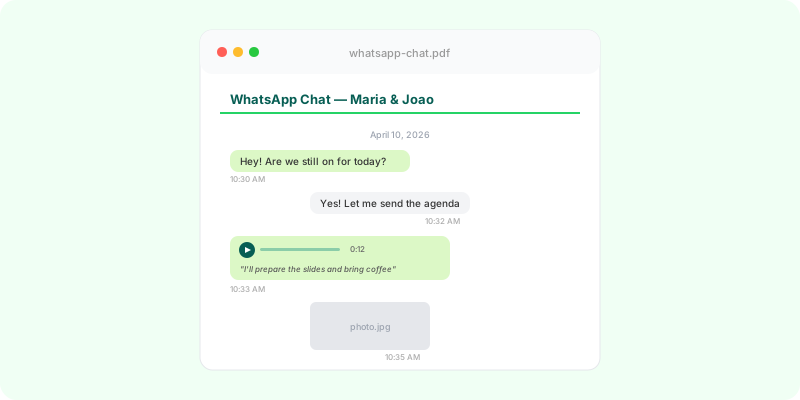
A fraud team or an officer needs the story in order: what was promised, when, and when the money left. A .zip of loose files doesn’t show that. Upload it to Zap2Doc and you get a PDF with every message in order with date, time and sender, the fake receipts and photos where they were sent, and voice notes transcribed in place. Add your payment receipts and a few lines of timeline. The preview is free.
The PDF is a presentation of your export. It isn’t authentication, a forensic report, a chain of custody or legal advice.
Be realistic, and careful #
Money isn’t always recovered, and investigations take time. Your report still matters: it can let the bank act, and it links your case to others by the same people. Be wary of anyone who contacts you offering to recover the money for a fee — that is often the same scam, a second time.