Faulty Used Car From a Dealer: Organising Your WhatsApp Chat With the Seller
Bought a used car or motorbike from a dealer and a fault has appeared? Your rights under the Consumer Rights Act, what the WhatsApp chat with the seller holds, and how to organise it into one PDF for the dealer, The Motor Ombudsman or a solicitor.
Buying a used car now happens almost entirely on WhatsApp. The dealer sends photos, quotes the mileage, assures you it’s just been serviced. You send the deposit and arrange collection. Three weeks later the engine light comes on and the gearbox starts to jolt — and everything that was said is scattered across hundreds of messages and voice notes.
When you come to complain, the chat with the dealer is the fullest record of what happened — if it’s complete and readable. This guide covers your rights, what to look for in the chat, and how to turn the export into one document for the dealer, a dispute service or a solicitor.
Your rights when you buy from a dealer #
Buying a car or motorbike from a dealer makes you a consumer under the Consumer Rights Act 2015:
- The car must be of satisfactory quality, fit for purpose and as described — judged against its age, mileage and price.
- Within 30 days of delivery you can reject the car and get a full refund (the short-term right to reject).
- After 30 days, the dealer gets one chance to repair or replace. If that fails, you can reject the car (with a possible deduction for the use you’ve had) or ask for a price reduction.
- Within six months of delivery, a fault is presumed to have been there at delivery unless the dealer can show otherwise. After six months, it’s for you to show it was.
A dealer’s own warranty (“3 months engine and gearbox”) comes on top of these rights; it doesn’t replace them.
If you paid partly by credit card for a car costing between £100 and £30,000, Section 75 of the Consumer Credit Act may let you claim against the card provider too.
A private sale is different: the Consumer Rights Act doesn’t apply, and beyond the car being as described, it’s largely buyer beware. Get advice before you act.
What the chat with the seller holds #
Before exporting, here’s what a typical negotiation keeps:
- The advert and photos showing the car’s condition before you bought it.
- What was said about the car: mileage, “no accidents”, “full service history”, “just had its MOT”.
- The offer and the deal: price, payment, part-exchange, collection date.
- Receipts: the deposit transfer, the invoice as a photo.
- Warranty promises — often in a 40-second voice note nobody will play again.
- Your complaint and the dealer’s replies, dated and timed.
Individual screenshots lose exactly what matters: the order of events and the voice notes. A screenshot shows one sentence; the whole chat shows that the sentence came before you paid.
Export the chat with media #
WhatsApp exports the conversation as a .zip through Export chat. Include media, or the advert photos and voice notes are left out. The guides for Android and iPhone show every screen. Keep the original .zip: it’s the source; everything else is a presentation of it.
Turn the .zip into a document #
The .zip holds an unformatted _chat.txt, loose photos named like IMG-20260812-WA0014.jpg and voice notes in .opus, a format many computers won’t open.
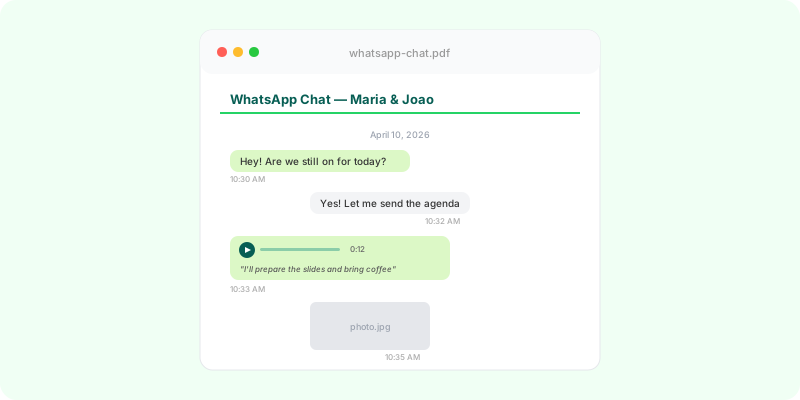
Zap2Doc turns it into one PDF anyone can read:
- Messages in chronological order, with the date, time and sender.
- Photos exactly where they were sent.
- Voice notes transcribed in place.
- Videos summarised as a sheet of 25 frames.
- Numbered pages, so you can say “page 12”.
- On the cover, the SHA-256 of the
.zipit was made from, so anyone can check the PDF came from exactly that file.
You upload the .zip, see a free preview and only pay if you want the full document.
Where the document fits #
- With the dealer. Complain in writing and say whether you’re rejecting the car or asking for a repair. Many dealers settle once they see what was promised laid out in order.
- With The Motor Ombudsman, if the dealer is accredited, or another alternative dispute resolution service the dealer names. Citizens Advice can point you to the right one.
- With a solicitor or through the small claims track, if there’s no agreement.
Bring what isn’t on WhatsApp: the invoice, the V5C, the service history, and the quote or diagnosis from the garage that found the fault.
For dealers #
The same chat protects the seller: when a customer complains months later, it shows what was said about the vehicle, which photos were sent and what was agreed about the warranty. Dealers handling many customers on WhatsApp can convert chats in batches with Zap2Doc Business, with volume discounts.
What the PDF is, and what it isn’t #
The PDF is an organised presentation of your WhatsApp export. It doesn’t authenticate the conversation, isn’t a forensic report, doesn’t establish chain of custody and isn’t legal advice. The SHA-256 on the cover identifies the source file; it doesn’t show that the export wasn’t changed before it was uploaded. The date next to a photo is when it was sent, not when it was taken.
In short #
Buying from a dealer gives you the right to reject within 30 days, one repair or replacement after that, and a six-month presumption that a fault was there from the start. Complain in writing, export the chat with media, turn it into a chronological PDF with photos and transcribed voice notes, and use the same document with the dealer, the dispute service and, if needed, a solicitor.