Tenancy Deposit Disputes: Organising WhatsApp Photos and Messages With Your Landlord
Check-in photos, the damp you reported to your landlord, the repair agreed in a voice note: how to turn your WhatsApp chat with the landlord or letting agent into a timeline of the property for check-out and a deposit dispute.
The check-in inventory says “walls in good condition”. But three months in, you sent your landlord a WhatsApp photo of the damp patch in the bedroom. He replied with a voice note: he’d send someone round. Nobody came. At check-out, the letting agent wants to deduct redecoration from your deposit.
The history of a rented home rarely lives in the inventory. It lives in the WhatsApp chat with the landlord or agent — check-in photos, problems reported, repairs agreed, videos of the leak, all dated. The trouble is that by check-out, that history is buried under hundreds of messages.
This guide explains how the deposit process works, how to use the chat as a timeline of the property, and how to turn it into a document you can hand over.
How the deposit process works #
The rules below describe England, which is where most readers of this guide rent; Wales is similar, and Scotland and Northern Ireland have their own schemes.
- Deposits must be protected. For an assured shorthold tenancy, the landlord must place the deposit in a government-approved scheme — the Deposit Protection Service, mydeposits or the Tenancy Deposit Scheme — and give you the prescribed information about it.
- Deposits are capped. Under the Tenant Fees Act 2019, a tenancy deposit is capped at five weeks’ rent where the annual rent is under £50,000, and six weeks’ rent above that.
- Fair wear and tear is not the tenant’s to pay for. Deductions are for damage beyond normal use, cleaning or missing items, measured against the condition at the start.
- Disputes go to the scheme first. Each approved scheme runs a free dispute resolution service. Both sides submit evidence and an adjudicator decides how the deposit is split.
- Repairs should be reported in writing. Landlords are responsible for many repairs, but they can only act on what they know about. Reporting the problem — and keeping the reply — is the tenant’s part.
That last point is where WhatsApp comes in. For most tenants, “report it to the landlord” now means a photo and a message on WhatsApp. The chat becomes the record of when each problem was reported and what was said back.
The chat as a timeline of the property #
A well-kept tenancy chat tells the property’s story in order:
- Move-in. Photos and videos of every room on the day you got the keys, pointing out what was already damaged — the loose skirting board, the cracked shower screen, the socket that doesn’t work.
- Problems during the tenancy. The damp, the leak, the blind that jams — each with a photo, a date and the landlord’s reply.
- Repairs. What was agreed, who paid, the voice note saying “take it off the rent”.
- Move-out. Photos and videos on the day you handed the keys back, and the conversation about the check-out report and the deposit.
A few habits make that timeline much clearer:
- Send photos on the day you take them. The date that gets recorded is when the message was sent, not when the photo was taken.
- Keep one chat with whoever manages the property, rather than spreading reports across calls and different conversations.
- Describe in writing what the photo shows (“damp patch on the ceiling in the back bedroom”). A photo without words loses its meaning out of context.
Export the chat with media #
WhatsApp exports the whole conversation as a .zip file through Export chat. Choose to include media — without it, the photos and videos, which are the point of a conversation about a property’s condition, are left out. The guides for Android and iPhone show every screen.
Tenancy chats are often large because of the videos. That isn’t a problem for the export, but keep the original .zip: it holds the photos and videos at the resolution they were sent in.
Turn the .zip into a document you can hand over #
Inside, the .zip is an unformatted text file and a folder of dozens of photos and videos with names like VID-20260314-WA0003.mp4. Nobody can follow the property’s story from that.
Zap2Doc turns the .zip into a single PDF in which the chat reads as a timeline:
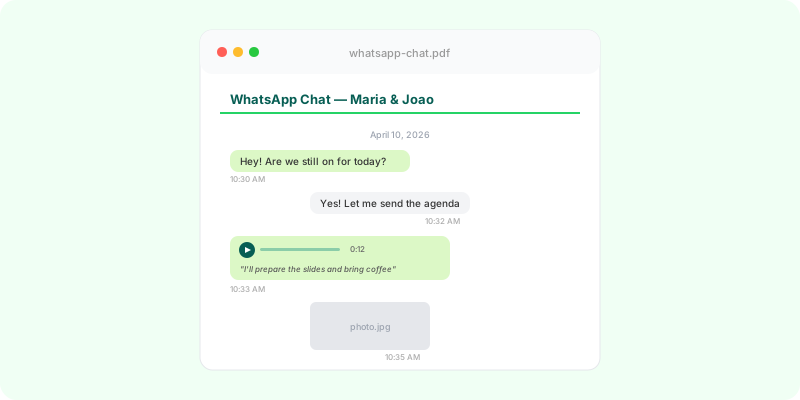
- Every photo exactly where it was sent in the conversation, right after the message that describes it. See how images appear in the PDF.
- Every video summarised as a sheet of 25 frames, start to finish, so it’s clear what it shows without opening it.
- Voice notes transcribed where they were sent — “take it off the rent” becomes text with a date and a sender.
- The date, time and sender of every message, and numbered pages, so you can point the agent to “page 9”.
- On the cover, the SHA-256 of the
.zipit was made from, so anyone can check that the PDF came from exactly that file.
You upload the .zip, see a free preview and only pay if you want the full document. If the tenancy was long, you can limit the document to a date range.
Where the document fits #
- In the conversation with your landlord or agent about deductions. Put the check-in inventory, the check-out report and the page of the PDF where the problem was reported side by side. Many disagreements are settled once the date of the report is clear.
- In the deposit scheme’s dispute service. The scheme will tell you what evidence it accepts and in what format; a single organised PDF alongside the inventories is easier for an adjudicator to follow than a folder of screenshots.
- With advice. Shelter, Citizens Advice or a solicitor can help if the dispute goes further.
Bring what isn’t in WhatsApp too: the tenancy agreement, the check-in and check-out reports, the deposit protection certificate and any repair invoices.
For inventory clerks and property managers #
Letting agents, managers and inventory clerks receive photos and videos of dozens of properties on WhatsApp. Turning each property’s chat into a chronological document makes it easier to file alongside the inventory and to answer a dispute months later. For many chats at once, Zap2Doc Business works in batches, with volume discounts.
What the PDF is, and what it isn’t #
The PDF is an organised presentation of your WhatsApp export. It doesn’t replace an inventory, doesn’t authenticate the conversation, isn’t a forensic report, doesn’t establish chain of custody and isn’t legal advice. The SHA-256 on the cover identifies the source file; it doesn’t show that the export wasn’t changed before it was uploaded.
In short #
Deposits must be protected, deductions are measured against the condition at the start, fair wear and tear isn’t the tenant’s to pay for, and disputes go to the scheme’s free service. Your WhatsApp chat often holds the story in between — photos, reports and replies, all dated. Export it with media, turn it into a chronological PDF with photos, videos and voice notes in place, and use it at check-out and, if you need to, in the scheme’s dispute service.