Recap a WhatsApp Negotiation: Offers, Counteroffers and What Was Agreed
Negotiations by WhatsApp drift: offers in text, concessions in voice notes, 'ok' at midnight. How to reconstruct the sequence of offers and the final terms before you sign, pay or renegotiate.
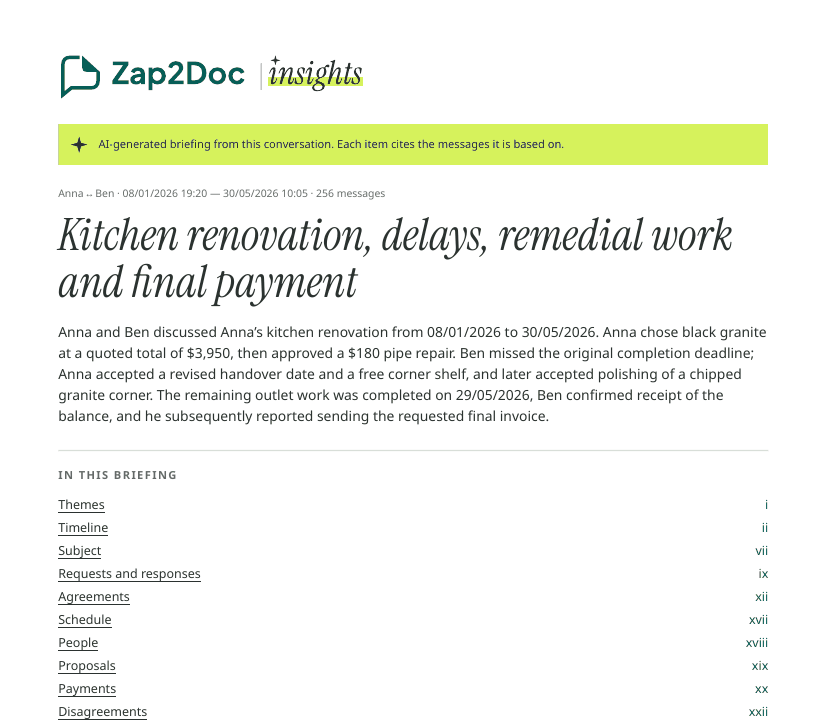
Buying a used car, hiring a contractor, agreeing terms with a supplier: the negotiation happens in WhatsApp, over days. The price moves, conditions get added in voice notes, someone says “fine” to something slightly different from what the other meant. Before you pay, sign, or start round two, you need the sequence straight.
What a negotiation recap needs #
- Every offer and counteroffer, in order, attributed to who made it, with the terms exactly as written.
- The concessions: what each side gave up (a discount, free delivery, a deadline).
- What was accepted: the final terms, and the message where the other side said yes.
- What’s still open: conditions mentioned but never settled.
- Money: price quoted vs. amount requested vs. payment reported vs. receipt confirmed. They are different things.
Doing it by hand #
Search the chat for currency symbols, numbers, “discount”, “price”, “include”, “deliver”, “deal”, “ok”. Write each offer as date · who · terms. Then find the last one that got a clear yes. And listen again to the voice notes: that’s where “and I’ll throw in the installation” usually lives.
With Insights #
Zap2Doc Insights pulls this out of the full export, voice notes included:
- proposals: offers and counteroffers, each attributed, with only the terms explicitly stated;
- agreements: what was agreed, by whom, amount or deadline as written, with status;
- payments: each statement about money, keeping a quote, a request, a reported payment and a confirmed receipt apart;
- subject: the product, service or property and the specifications actually mentioned;
- disagreements and open points.
Amounts are copied exactly as written, never converted or recalculated. Each item links to its message.
Before round two #
Use the recap to prepare:
- What did they accept before? A price they agreed to last year is a reference point.
- What did you concede? Don’t give the same thing twice.
- What was promised and never confirmed? Ask for it in writing this time.
Then send a short recap of the new terms after you agree: follow-up email template. If it ends in a dispute instead, see supplier dispute.